WiFi Camera Buyer's Guide: Tuya, Ingenic & SmartSens Parts
Tuya, Ingenic and SmartSens: What Actually Decides How Good a WiFi Camera Is
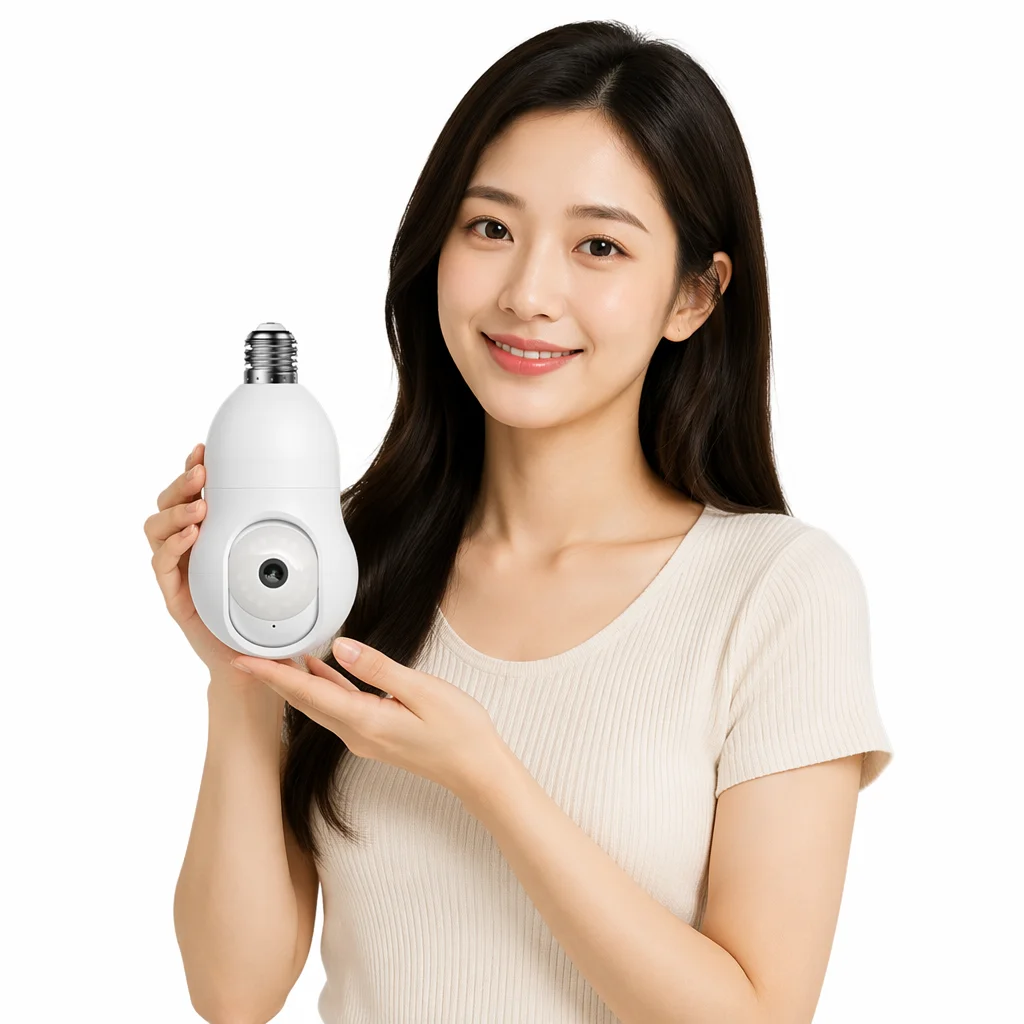
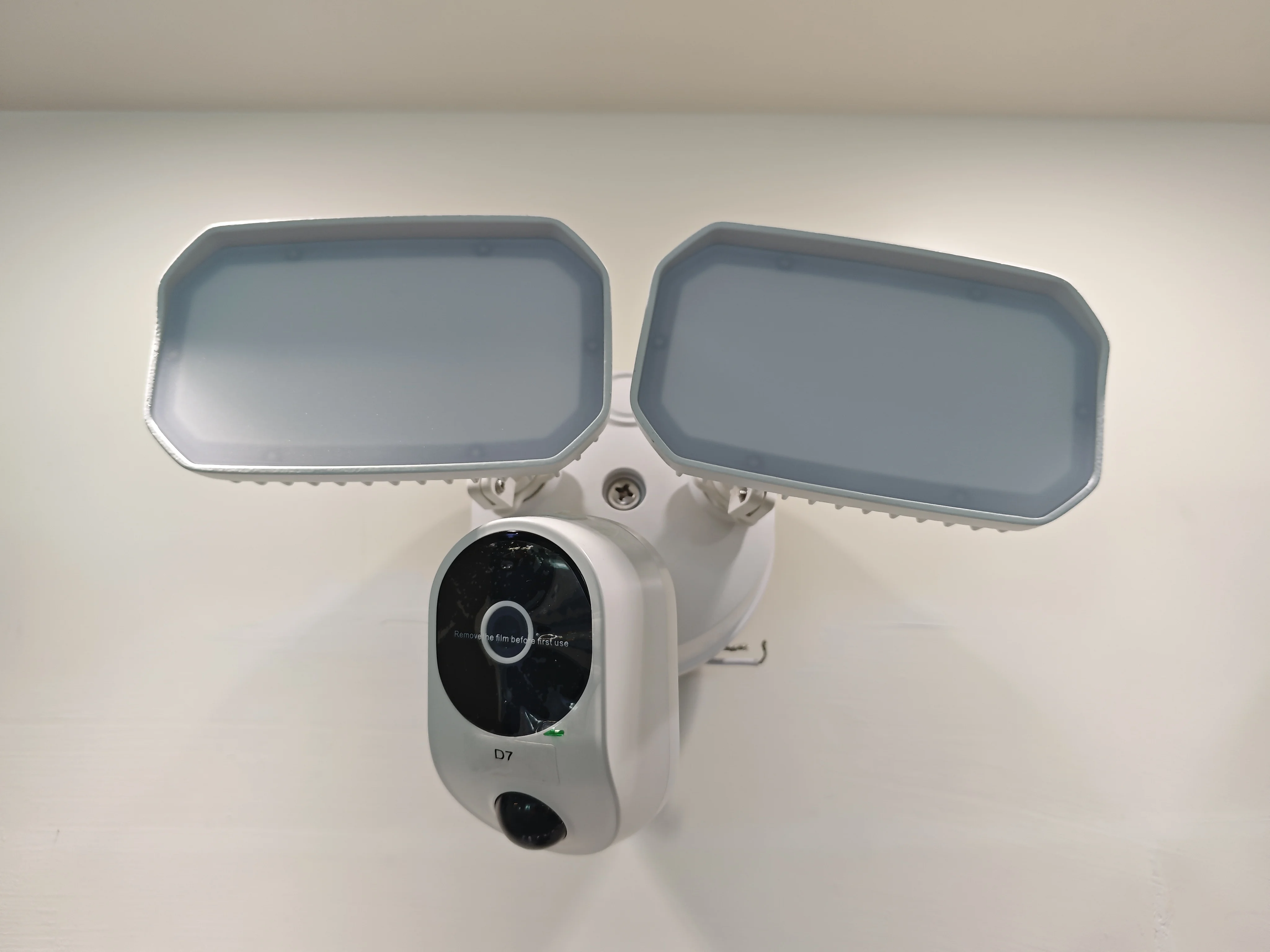
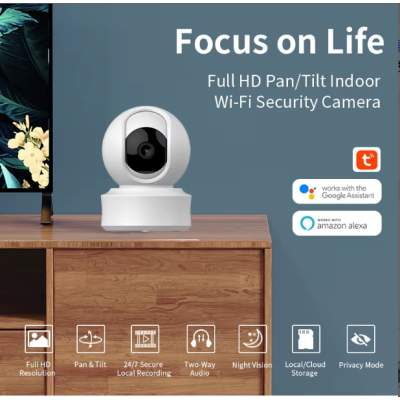
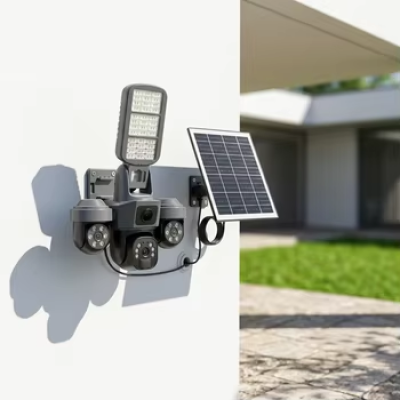
Every WiFi security camera is built from the same short list of parts. Three of them decide almost everything the end user will notice: the app, the SoC, and the image sensor. In the volume shipments going to Europe, North America, Southeast Asia and the Middle East, those three are usually Tuya, Ingenic and SmartSens.
That is the easy part. The harder part is that “we use Tuya and Ingenic” says nothing about whether the camera is any good. Both brands ship across a wide range of part numbers, and choosing the wrong one inside the right brand costs you a whole performance tier. Here is how the choices actually map out.
/products-list.htm
1. The app: Tuya, and the one detail European buyers always ask about
Tuya (sold to consumers as Smart Life or Tuya Smart) is one of the most widely installed camera apps in the world, with interface languages covering English, German, French, Spanish, Arabic and more. End users get QR-code pairing, live view, two-way audio, pan/tilt control, motion push notifications, SD card playback, optional cloud storage, and voice control through Alexa and Google Assistant.
For importers and brand owners, the value is less about features than about what does not come back:
Pairing works. Most one-star reviews in this category are “couldn’t connect to WiFi”, and a mature app removes most of them.
Remote viewing holds up. Regional server infrastructure matters more than the camera when a customer checks footage from another country.
White-label is available. You can ship your own branded app, subject to Tuya’s minimum volume and licensing fee — worth starting early, since it adds four to eight weeks.
What European buyers will actually ask: where the video is stored. As of June 2025 Tuya operates seven data centres worldwide, including Frankfurt on AWS, which serves Germany, France, the Netherlands, Italy, Spain, Austria, Switzerland and the rest of Europe, with a Google Cloud option in the Netherlands. Tuya holds ISO/IEC 27001, ISO/IEC 27701, SOC 2 Type II and a GDPR validation report. Data residency can therefore be named in a contract rather than left vague — and for German and Dutch customers, that single point often decides whether the deal happens at all.
2. The SoC: Ingenic, but pick by resolution first
Ingenic is one of the main suppliers of video SoCs for surveillance in China, and the T series dominates WiFi, PoE and battery/solar cameras. The T31, T32, T33 and T41 are not interchangeable, and their limits are hard limits.
T31 — 22 nm process, the mainstream workhorse. Max 5 MP (2592×1920@30), H.264/H.265 encoding, SIMD128 accelerator running Magik algorithms for human, face, vehicle and pet detection. Typical use: 2–4 MP mains-powered and battery cameras.
T31ZL / T31ZX — ultra-low-power variants of the T31. Same 5 MP ceiling and H.265 encoding, optimised for battery and solar models.
T32 — the 4K platform. 8 MP class resolution, H.265, smart video/audio algorithms. This is what a real 4K model is built on.
T33 — 5 MP, entry-level AOV flagship. 2880×1620@30, H.265, and a real 0.5 TOPS (INT8) NPU running human, vehicle and pet detection, with AI-PIR detection reaching 70 m. Around 40 mW at 4 MP@1fps — the strongest value in solar cameras right now.
T41 — the AOV reference part. 4–5 MP, H.265, built for always-on ultra-low-power recording in off-grid and AOV deployments.
Three things worth remembering:
The T31 cannot do 4K. Its ceiling is 5 MP (2592×1920). A true 4K camera needs a T32 or T41 — no firmware setting changes that.
The T33 is the one with a real NPU. 0.5 TOPS, AI fused with PIR, 70 m human detection, and around 40 mW at 4 MP/1 fps, which is why it is currently the strongest value in solar cameras.
“AI” means different things on T31 and T33. Both can detect humans, but one does it on a SIMD accelerator and the other on an NPU. False-alarm rate, power draw and headroom are not in the same class. Marketing both as “built-in AI” invites a question you will not enjoy answering.
3. The sensor: SmartSens SC series, by part number
The sensor sets the ceiling on image quality, and the SC series is everywhere in IP cameras. What matters is the resolution, the optical format and the low-light figures — not the fact that it says SC on the box.
SC2336 / SC3336 — 2 MP and 3 MP, around 1/2.8” optical format. Mature and cost-efficient. Best for entry-level models.
SC4336 — 4 MP, 2560×1440@30, 1/3.06” with 2.0 µm pixels. 77 dB dynamic range, 38 dB SNR, operating range −30 to 85 °C. Best for mainstream 4 MP PTZ and bullet cameras.
SC400AI / SC401AI — 4 MP, 1/3” format. SFCPixel and PixGain technology for full-colour night vision; the SC400AI adds 60 fps and staggered HDR. Best for full-colour night-vision models.
SC8238 — 8 MP, 3840×2160@30, 1/2.7” with 1.5 µm BSI pixels. HDR up to 100 dB and the lowest power in its class. Best for consumer 4K models.
Two details that separate a careful supplier from a careless one:
Operating temperature is not the same as best-image temperature. The SC4336 works from −30 to 85 °C, but its best image quality range is −20 to 60 °C. For Germany, Scandinavia or Canada, specify against the second number, or expect noise and colour shift in February.
Full-colour night vision is not the sensor’s job alone. SFCPixel gives you a better starting point, but the result depends on floodlight power, lens aperture and ISP tuning. Ask for footage, not a part number.
4. Putting it together: four builds that work
Entry level: T31 or T31L SoC, SC2336 or SC3336 sensor, 2–3 MP. Volume indoor PTZ cameras.
Mainstream: T31 or T31ZL SoC, SC4336 sensor, 4 MP (2.5K). Outdoor PTZ, solar and battery models.
Full colour: T31 or T33 SoC, SC400AI or SC401AI sensor, 4 MP. Models that lead on night vision.
4K: T32 or T41 SoC, SC8238 sensor, 8 MP 4K. Premium models — watch thermals and bitrate.
Spending more is not the same as spending well. A T31 cannot drive a 4K sensor, a T33 paired with an SC8238 wastes headroom, and a power-hungry pairing will simply kill the battery life of a solar unit. Decide the use case first — battery or mains, 4K or not — then work backwards to the silicon.
5. Five things to verify before you place an order
Photograph of the SoC marking, or the firmware version. “Ingenic solution” on a datasheet proves nothing; the T31 and T33 look similar and the marking on the chip does not lie.
Tuya PID and the product authorisation. White-label apps, cloud revenue share and OTA rights all hang off the PID. Verbal promises are not transferable.
The exact sensor part number. Not “4 MP HD sensor”. At 4 MP, the SC4336 and the SC400AI are a tier apart at night.
Real night and cold-weather footage, with a timestamp in frame. A datasheet cannot show you floodlight behaviour or ISP tuning.
CE and RED reports that name the exact model you are quoting. A report for a different model number is worth nothing in the EU, and a German buyer will check.
FAQ
Can the Tuya app be white-labelled?
Yes, subject to Tuya’s minimum order volume plus the app customisation and platform licence fees. Allow four to eight weeks, and start before mass production rather than after.
Which Ingenic chip should a solar camera use?
T31ZL or T31ZX for standard battery models; the T33 when you want stronger on-device AI and lower standby draw; the T41 for off-grid sites that need long continuous recording. The standard T31 is not the best choice for a battery camera — a detail worth raising with any supplier who quotes one.
Are SmartSens sensors good enough for outdoor full-colour night vision?
Yes. The SC400AI and SC401AI are strong in low light, and with a white-light floodlight and a sensible lens aperture they deliver proper full-colour night footage. But judge it from sample video, not from the sensor name.
What goes into a real 4K model?
A T32 or T41 SoC with an SC8238 sensor (8 MP, 1/2.7”, 100 dB HDR). Plan for thermal design and bitrate control as well — 4K over weak WiFi stalls easily, so ship a 2K substream as the default.
Buying WiFi cameras with Tuya, Ingenic and SmartSens inside? Send us your target market, power source, required resolution and estimated volume. We will quote against a real configuration and include photographs of the SoC marking and sensor part number for the exact model we are offering./contact-us.htm