The Ultimate Guide to Outdoor Security Cameras: Key Features & Technology
As homeowners and business owners, we understand the increasing need for robust protection. Outdoor Security Cameras are no longer just an extra; they're essential for deterring crime and providing peace of mind. Selecting the right outdoor security cameras can feel overwhelming with so many options available. We aim to simplify this process by breaking down the key features and technologies that truly matter. This guide will help you understand the core differences between wired and wireless security cameras, explore crucial features like resolution and night vision, and navigate storage and power considerations to help you make an informed decision for your outdoor security camera system.
Explore our Hot New Arrivals to see the latest advancements in security technology.
Key Takeaways
For those in a hurry, here’s a quick summary of the essential points covered in this guide:
- Wired vs. Wireless: Wired cameras, including PoE systems, offer unparalleled reliability and stable connections, making them ideal for permanent, comprehensive surveillance. Wireless cameras provide flexibility and easy installation but are dependent on Wi-Fi signal strength and battery life.
- Essential Video Features: 4K resolution is becoming the new standard for capturing fine details like license plates. A wide field of view (130-180 degrees) is crucial for covering large areas, while color night vision provides significantly more detail than traditional infrared in low-light conditions.
- Durability is Non-Negotiable: Look for cameras with an IP65 rating or higher to ensure they are protected against dust and water. This is critical for longevity and performance in harsh weather.
- Smart Detection Reduces False Alarms: Modern cameras use AI to differentiate between people, vehicles, animals, and packages. This intelligence makes alerts more meaningful and allows you to focus only on genuine threats. A dedicated Smart Camera often excels in these features.
- Power and Storage Strategy: Power over Ethernet (PoE) offers a single-cable solution for power and data, representing the gold standard for reliability. For storage, a hybrid approach combining local NVR/SD card recording with optional cloud backup provides the best of both worlds—security and accessibility.
- Installation and Placement: While DIY installation is cost-effective for simpler systems, professional installation is recommended for complex wired setups to ensure optimal coverage and performance. Key placement locations include all ground-floor entry points, driveways, and backyards, mounted high enough to prevent tampering.
Wired vs. Wireless Outdoor Security Cameras: What's Best for My Needs?
When beginning the journey to secure your property, one of the first and most critical decisions is choosing between a wired and a wireless camera system. Each approach has distinct advantages and trade-offs related to reliability, installation, and performance. The best option for you depends heavily on your specific security needs, property layout, and technical comfort level. For organizations that need a reliable, high-quality system, wired is the preferred choice, whereas wireless systems may be better if flexibility and mobility are priorities. Let's explore the details to help you make a confident choice.
Understanding Wired Security Cameras
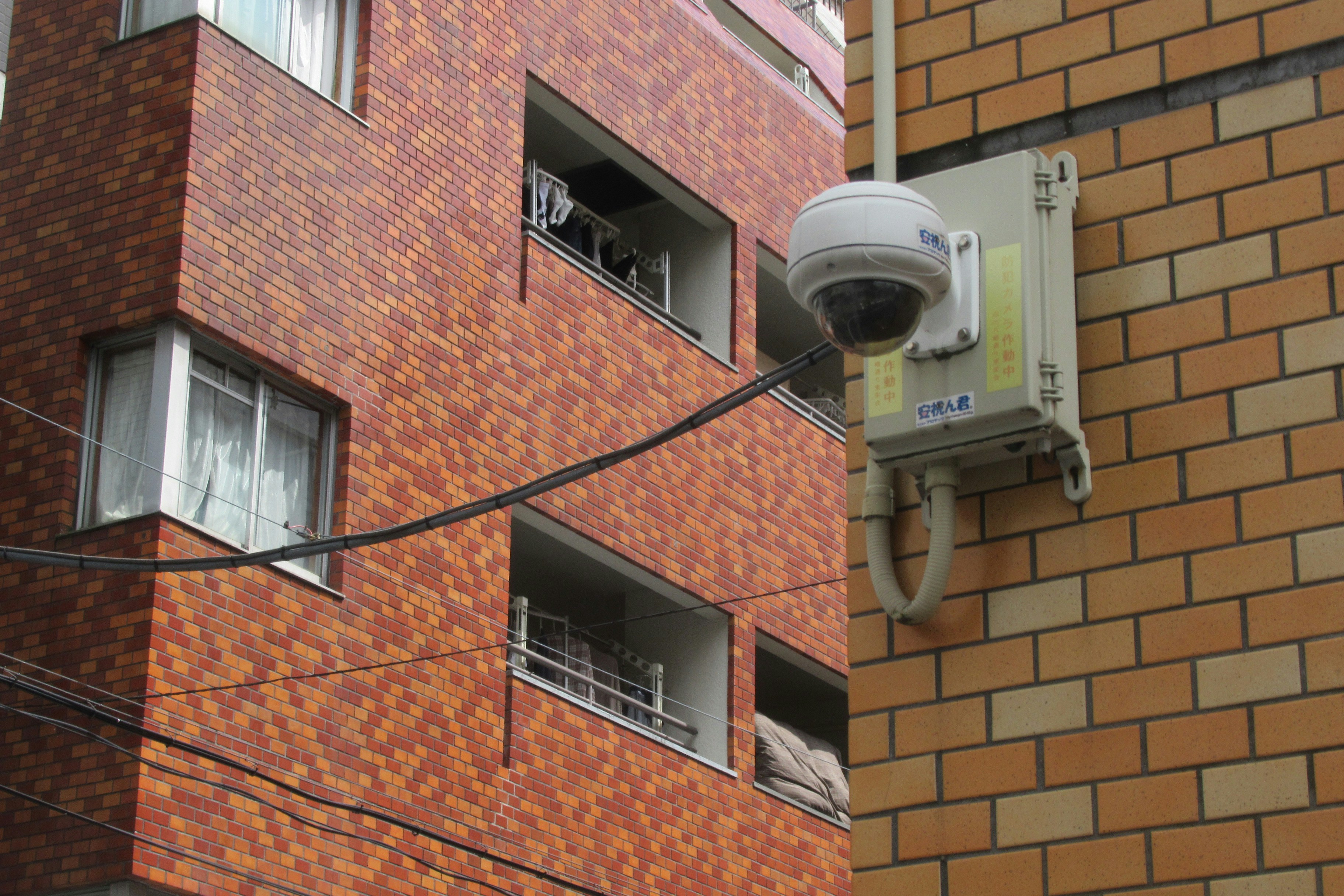
Wired security cameras are the traditional backbone of surveillance, known for their stability and consistent performance. These systems physically connect each camera to a central recording device, like a Digital Video Recorder (DVR) or a Network Video Recorder (NVR), and to a power source using cables. Modern IP cameras often use Power over Ethernet (PoE), which simplifies installation by sending both power and data through a single Ethernet cable.
Pros of Wired Security Cameras
Wired systems are favored in professional and high-security settings for several key reasons:
- Unmatched Reliability: Because they are hardwired, these cameras are not susceptible to Wi-Fi signal drops, interference from other wireless devices, or network congestion. This ensures a stable, uninterrupted video feed, which is critical for continuous 24/7 monitoring.
- Superior Video Quality: A wired connection can handle a much larger amount of data than most wireless setups. This means wired systems can consistently support higher resolutions like 4K without concerns about bandwidth limitations, resulting in clearer, more detailed footage.
- Enhanced Security: A closed, wired system is significantly less vulnerable to hacking compared to wireless systems that transmit data over the air. As long as the physical wires are secure, the video feed remains protected.
- No Battery Management: The cameras receive constant power from the electrical system, so you never have to worry about recharging or replacing batteries. This "set it and forget it" aspect makes them ideal for long-term, low-maintenance operation.
Cons of Wired Security Cameras
Despite their strengths, wired systems have some notable drawbacks:
- Complex Installation: Running cables throughout a property can be a major undertaking. It often requires drilling through walls, navigating attics and crawlspaces, and can be disruptive, making it better suited for new construction or major renovations.
- Less Flexibility: The cameras are fixed in place by the wiring. Moving a camera to a new location is a significant task, making the system less adaptable if your surveillance needs change.
- Higher Initial Installation Cost: While the cameras themselves can be competitively priced, the cost of professional installation to run the cables can be substantial, especially for larger properties.
- Vulnerability to Power Outages: Standard wired cameras will fail during a power outage unless they are connected to an uninterruptible power supply (UPS) or a backup generator.
Understanding Wireless Security Cameras
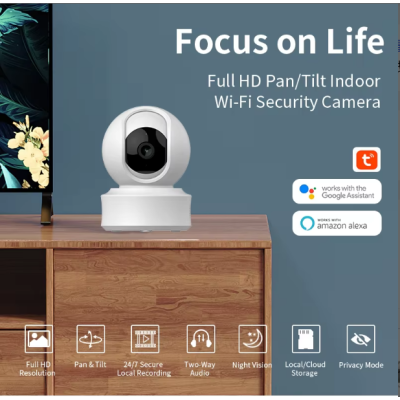
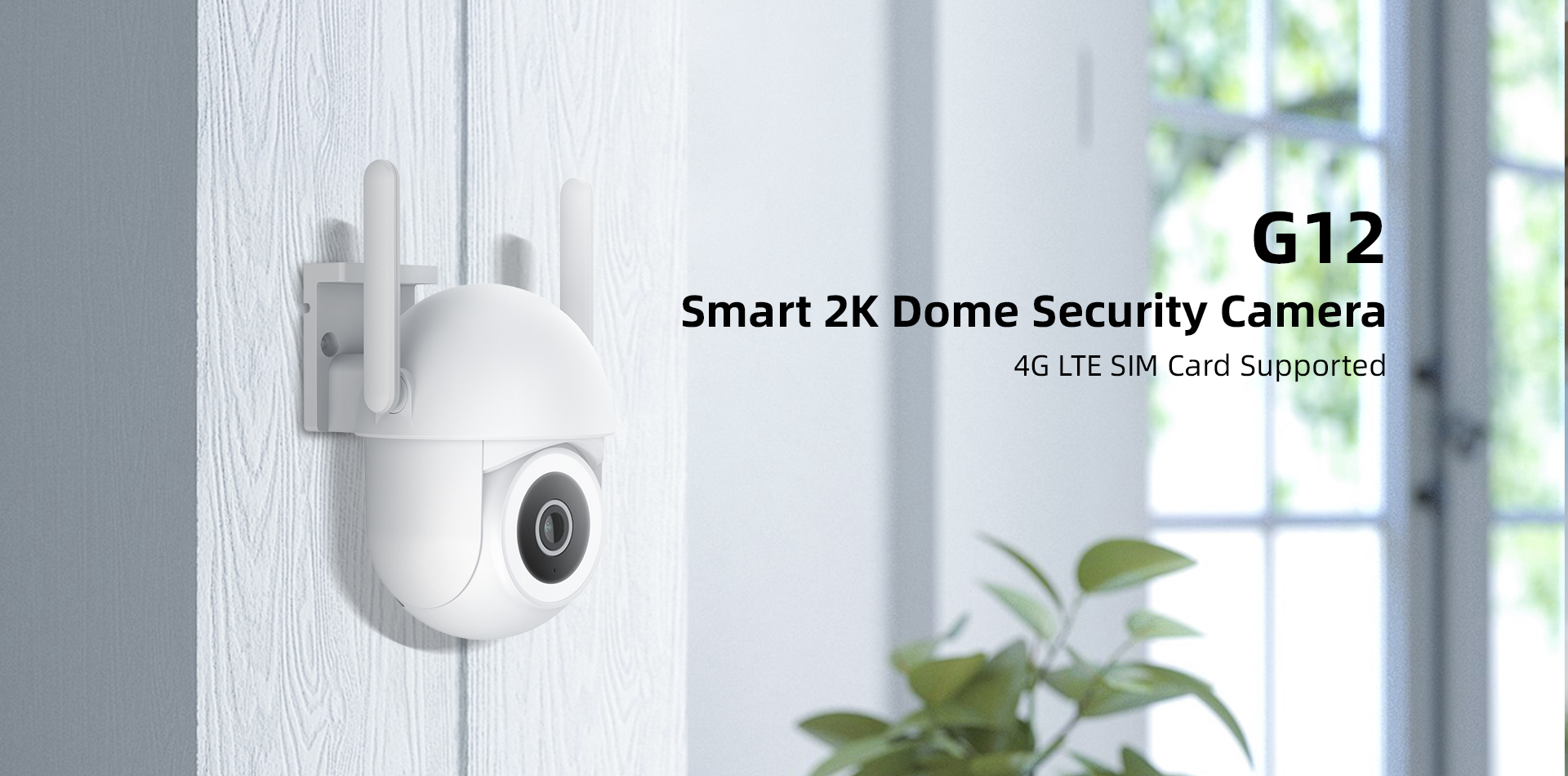
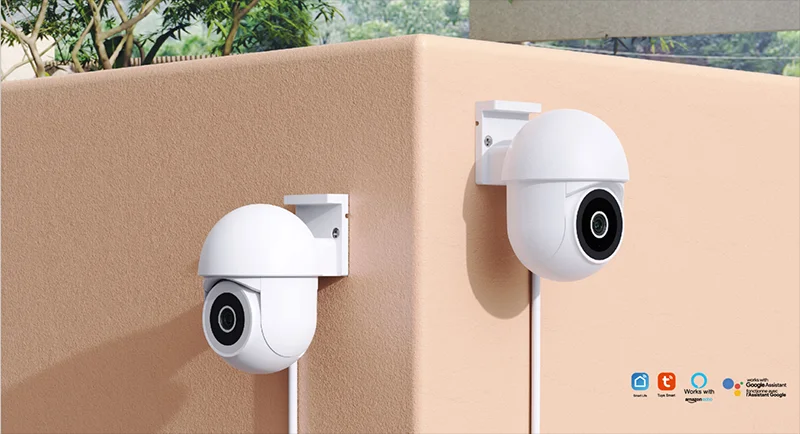
Wireless security cameras have surged in popularity, especially in the residential market, due to their convenience and ease of setup. It's important to clarify that "wireless" typically refers to the data transmission (via Wi-Fi); most of these cameras still require a power cable, though completely wire-free, battery-powered options are also common.
Pros of Wireless Security Cameras
The appeal of wireless cameras lies in their simplicity and adaptability:
- Easy and Flexible Installation: This is the number one advantage. Without the need for data cables running back to a recorder, you can place these cameras anywhere within range of your Wi-Fi signal and near a power source. Battery-powered models offer even greater freedom.
- Ideal for Renters and Existing Homes: The minimally invasive setup makes them perfect for renters or homeowners who don't want to drill holes and run cables through their walls.
- Scalability: Adding a new camera to a wireless system is typically as simple as mounting it and connecting it to your Wi-Fi network through an app.
- Remote Accessibility: Most wireless cameras are designed for easy remote viewing via smartphone apps, making them a user-friendly choice for on-the-go monitoring.
Cons of Wireless Security Cameras
The convenience of wireless technology comes with potential performance trade-offs:
- Reliance on Wi-Fi: The camera's performance is entirely dependent on the strength and stability of your Wi-Fi network. Weak signals, network congestion, or router issues can lead to dropped connections, lag, and gaps in your footage.
- Potential for Interference: Wireless signals can be disrupted by other electronic devices, such as microwaves or cordless phones, or even by neighbors' Wi-Fi networks, which can degrade video quality.
- Security Risks: Since the video feed is transmitted through the air, it is more vulnerable to hacking if not properly secured with strong encryption and a secure password.
- Battery Maintenance (for wire-free models): True wire-free cameras rely on batteries that need to be periodically recharged or replaced, which can become a frequent chore, especially in high-traffic areas.
Hybrid Security Camera Systems
What if you want the reliability of wired cameras for critical areas but the flexibility of wireless for others? A hybrid security camera system offers the best of both worlds. These systems use a special hybrid video recorder (sometimes called an HVR or a specially configured NVR) that can manage and record footage from both traditional wired/PoE IP cameras and wireless Wi-Fi cameras simultaneously.
This approach allows you to:
- Upgrade in Stages: If you have an older analog system, you can use a hybrid recorder to keep your existing cameras while gradually adding high-definition IP cameras.
- Optimize for Location: Use robust wired PoE cameras for crucial entry points like the front door and driveway, and install flexible wireless cameras in locations where running a cable is difficult or impossible, like a detached shed or a distant fence line.
- Balance Cost and Performance: You can invest in high-performance wired cameras for vulnerable spots while saving on installation costs by using wireless cameras in less critical areas.
A hybrid system provides a customized, scalable, and practical solution that adapts to the unique challenges of your property.
| Feature | Wired Security Cameras | Wireless Security Cameras |
|---|---|---|
| Connection | Physical Cable (Ethernet/Coax) | Wi-Fi |
| Reliability | Very High: Not affected by Wi-Fi issues. | Moderate: Dependent on Wi-Fi signal strength. |
| Installation | Complex: Requires running cables. | Easy: Simple setup, no data cables. |
| Flexibility | Low: Fixed camera locations. | High: Easy to move and reposition. |
| Video Quality | Excellent: Supports high bandwidth for 4K+. | Good to Great: Can be limited by Wi-Fi bandwidth. |
| Security | High: Closed system, hard to hack. | Moderate: Vulnerable if Wi-Fi is not secured. |
| Power Source | Mains Power / PoE | Mains Power or Battery |
| Best For | Large properties, businesses, permanent high-security setups. | Renters, smaller homes, areas where cabling is impractical. |
Key Features and Technologies for Outdoor Security Cameras
Beyond the wired versus wireless debate, the effectiveness of an outdoor security camera hinges on its technological capabilities. A powerful security system is more than just a camera; it's a combination of high-quality imaging, intelligent software, and robust hardware. Let's break down the essential features that differentiate a basic camera from a truly effective surveillance tool.
Video Quality: Resolution and Field of View
The primary job of a security camera is to see what's happening. The clarity and breadth of its vision are determined by two key specifications: resolution and field of view.
- Resolution: This measures the number of pixels in an image, directly impacting its clarity. While 1080p (Full HD) has long been the standard, 4K (Ultra HD) cameras are now widely accessible and highly recommended. A 4K camera captures an image with 3840 x 2160 pixels, which is four times the detail of a 1080p camera. This dramatic increase in pixel density is crucial for outdoor security. It allows you to digitally zoom in on recorded footage to identify critical details like faces, clothing logos, or license plate numbers from a distance without the image becoming a blurry mess. For large properties or high-security areas, 4K resolution is a worthy investment.
- Field of View (FOV): Measured in degrees, FOV describes how wide of an area the camera can capture. A wider FOV means fewer cameras are needed to cover a large area like a backyard or driveway. Most outdoor cameras offer a wide-angle FOV, typically between 110° and 160°. For monitoring expansive areas, a camera with a 130° FOV or more is ideal. The trade-off is that a very wide "fisheye" view can distort the image and make objects at the center appear smaller. The best choice depends on the specific location—a narrow FOV might be better for a long, straight driveway, while a wide FOV is perfect for a broad front yard.
Night Vision Capabilities in Security Cameras
Crime doesn't stop when the sun goes down, so your cameras shouldn't either. Night vision technology is essential for 24/7 protection. There are two main types to consider:
Infrared (IR) Night Vision: This is the most common and traditional form of night vision. The camera is equipped with IR LEDs that emit infrared light, which is invisible to the human eye. The camera's sensor picks up this light, creating a clear black-and-white image even in complete darkness. The primary benefits of IR are its discreet operation (intruders won't see a visible light) and its effectiveness in zero-light conditions.
Color Night Vision: A significant technological advancement, color night vision provides far more useful detail for identification. It works in one of two ways:
- Advanced Low-Light Sensors: These cameras use highly sensitive sensors and wide-aperture lenses to amplify small amounts of ambient light (from streetlights, porch lights, or even the moon) to produce a full-color image.
- Built-in Spotlights: Other cameras have small but powerful white-light LEDs that activate when motion is detected, illuminating the scene and recording in full color. This has the added benefit of acting as a deterrent, startling and exposing any potential intruder.
When identifying details like the color of a car or a suspect's clothing is a priority, color night vision is unequivocally the better choice. Some advanced cameras even offer a hybrid or "smart" night vision mode that operates in discreet IR mode and then switches to full-color spotlight recording when a person is detected.
Weather Resistance and Durability for Outdoor Security Cameras
Outdoor cameras are constantly exposed to the elements, including rain, snow, dust, and extreme temperatures. Their ability to withstand these conditions is indicated by their Ingress Protection (IP) rating.
An IP rating consists of two digits:
- First Digit (Solids): Rates protection against solid objects, from fingers to dust. A '6' is the highest rating, meaning the enclosure is completely dust-tight.
- Second Digit (Liquids): Rates protection against water ingress. This is the most critical number for outdoor cameras.
Here's what the common ratings mean:
- IP65: Protected against low-pressure water jets from any direction. This is sufficient for handling normal rain and splashes, making it a good minimum standard for most outdoor cameras.
- IP66: Protected against powerful water jets. These devices can withstand heavy rain, storms, and even being hosed down. This offers a higher level of durability for more exposed locations.
- IP67: Protected against temporary submersion in water (up to 1 meter for 30 minutes). This level of protection is excellent for areas prone to flooding or extreme weather.
For any outdoor camera, look for a rating of at least IP65 to ensure it can survive the rigors of the outdoors.
| IP Rating | Protection Against Solids (Dust) | Protection Against Liquids (Water) | Best Use Case |
|---|---|---|---|
| IP65 | 6 (Dust Tight) | 5 (Low-pressure jets) | General outdoor use, sheltered areas, light rain |
| IP66 | 6 (Dust Tight) | 6 (Powerful jets) | Exposed locations, heavy rain, industrial washdowns |
| IP67 | 6 (Dust Tight) | 7 (Temporary submersion) | Flood-prone areas, marine environments |
Smart Detection and Alerts in Modern Security Cameras
One of the biggest complaints about older security cameras was the constant stream of false alarms caused by swaying trees, passing bugs, or shadows. Modern cameras solve this with AI-powered smart detection. This feature allows a Smart Camera to analyze what it sees and differentiate between various objects.
Common smart detection capabilities include:
- Person Detection: The camera only alerts you when it identifies a human shape, ignoring animals or other motion.
- Vehicle Detection: Useful for monitoring driveways and parking lots, this feature specifically alerts you to the arrival or departure of cars.
- Package Detection: Get a specific notification when a package is delivered to your doorstep, helping to combat porch piracy.
- Animal Detection: Avoid alerts for squirrels or the neighbor's cat, or use it specifically to see what wildlife visits your yard at night.
By filtering out irrelevant motion, smart detection ensures that the alerts you receive are meaningful and actionable, transforming your security camera from a passive recorder into an intelligent guard. A holistic smart home strategy can extend this intelligence indoors, for instance, by monitoring pets with a specialized device like a Smart Pet Feeder that often includes its own camera, integrating seamlessly with your overall security app.
Audio Features for Enhanced Outdoor Security Cameras
Visuals are only half the story. Audio capabilities can dramatically increase the effectiveness of your outdoor security system.
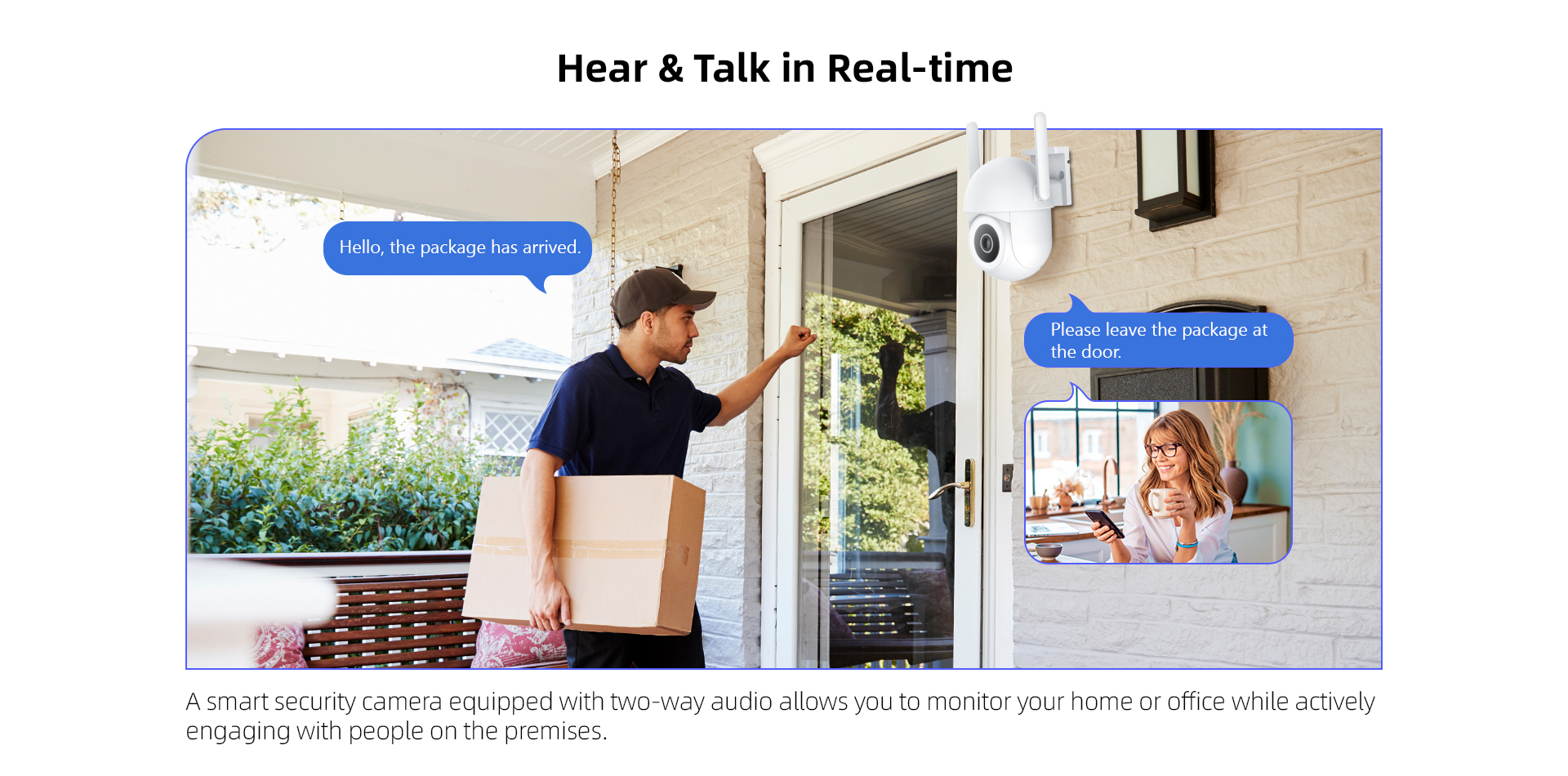
- Two-Way Audio: This feature uses a built-in microphone and speaker, allowing you to hear what's happening and speak through the camera from your smartphone app. It's incredibly versatile: you can greet visitors, instruct delivery drivers, or directly confront and warn off a trespasser. Studies have shown that a verbal warning can significantly deter break-in attempts.
- Siren Alarms: Many cameras include a loud, built-in siren that you can trigger remotely or set to activate automatically when a person is detected in a restricted area. The loud noise draws immediate attention to the situation, startling the intruder and alerting neighbors to a potential problem.
Together, two-way audio and sirens transform the camera from a passive observation tool into an active deterrent, giving you the power to intervene in a situation in real time.
Powering Your Outdoor Security Cameras: Options and Considerations
A security camera is useless without a consistent and reliable power source. The way you choose to power your outdoor cameras will have a significant impact on their reliability, installation complexity, and overall performance. There are three primary methods for powering outdoor surveillance systems, each with its own set of advantages and disadvantages.
Traditional Wired Power for Security Cameras
This is the most straightforward power method, where each camera is connected to a nearby electrical outlet via a power adapter. Most "wireless" cameras that transmit data via Wi-Fi still rely on this method for power.
Pros:
- Constant Power: As long as your property has electricity, the camera will remain powered on for continuous recording and operation.
- High Reliability: It provides a stable and uninterrupted power flow, free from concerns about battery life.
Cons:
- Location Constraints: The need for a nearby power outlet severely limits placement options. You may need to hire an electrician to install new outdoor-rated outlets, adding significant cost and complexity to the installation.
- Vulnerability: Exposed power cords can be a weak point, as they can be easily unplugged or cut by a determined intruder, disabling the camera.
- Aesthetic Challenges: Running power cables along walls can be visually unappealing and difficult to conceal.
- Power Outage Susceptibility: Like all grid-tied devices, these cameras will shut down during a power outage unless connected to a backup battery system.
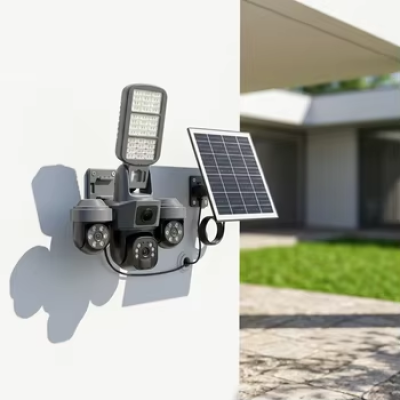
Battery and Solar-Powered Security Cameras
For maximum flexibility, battery-powered and solar-assisted cameras offer a completely wire-free solution. These cameras are ideal for locations where running any kind of cable is impractical or impossible.
Battery-Powered Cameras: These run on rechargeable lithium-ion battery packs.
- Pros:
- Ultimate Placement Freedom: You can mount them virtually anywhere without worrying about any wires. Installation is incredibly fast and simple.
- Portability: They are easy to move and reposition as your security needs change, making them perfect for temporary setups or rental properties.
- Cons:
- Maintenance Required: Batteries must be periodically removed and recharged. The frequency depends on usage, but it can be a regular chore, especially in high-traffic areas or cold weather, which drains batteries faster.
- Limited Operation: To conserve power, most battery cameras only record when motion is detected and may have slower "wake-up" times, potentially missing the start of an event. They are generally not suitable for continuous 24/7 recording.
- Pros:
Solar-Powered Cameras: These are essentially battery-powered cameras that come with a small solar panel. The panel trickle-charges the battery during the day to keep it topped up.
- Pros:
- Continuous Operation: With sufficient sunlight, the solar panel can provide a non-stop power supply, significantly reducing or eliminating the need to manually recharge the battery.
- Eco-Friendly and Cost-Effective: They run on renewable energy and can save on long-term electricity costs.
- Excellent for Remote Locations: Ideal for monitoring areas far from the house, like barns, gates, or large properties without access to grid power.
- Cons:
- Dependence on Sunlight: Performance is entirely dependent on receiving several hours of direct sunlight each day. They may struggle in heavily shaded areas, during long periods of overcast weather, or in regions with harsh winters.
- Higher Upfront Cost: Solar-powered systems typically have a higher initial purchase price compared to standard battery or wired models.
- Panel Maintenance: The solar panel must be kept clean from dust, pollen, and snow to ensure it functions efficiently.
- Pros:
Power over Ethernet (PoE) for Security Cameras
Power over Ethernet (PoE) represents the gold standard for modern wired security systems. This technology allows a single Ethernet cable to transmit both high-speed data and electrical power directly to the camera. This makes PoE the most reliable and robust power solution available.
Pros:
- Single-Cable Simplicity: The combination of power and data in one cable dramatically simplifies installation. You don't need to place cameras near power outlets, offering much more placement flexibility than traditional wired power.
- Exceptional Reliability: A hardwired PoE connection delivers a consistent, stable power supply and an unjammable data link, resulting in rock-solid performance with almost no lag or dropouts. PoE systems can also be connected to a central UPS battery backup at the NVR, keeping the entire system running during a power outage.
- Scalability and Flexibility: Expanding a PoE system is straightforward. You can run Ethernet cables up to 100 meters (328 feet) without signal degradation, and PoE switches can be used to extend this range even further.
- Cost-Effective Installation: While the initial cable-running can be labor-intensive, PoE often reduces total costs by eliminating the need to hire an electrician for new outlet installation.
Cons:
- Installation Effort: Like any wired system, running the Ethernet cables through walls and ceilings requires more initial effort than a wire-free setup.
- Requires PoE-Compatible Equipment: You need a PoE-enabled NVR or a separate PoE switch/injector to power the cameras.
Integrating your PoE cameras into a smart home ecosystem can further enhance their utility. For example, you can use smart automation rules with other devices, like Smart Plugs/Sockets, to turn on lights or other electronics when a camera detects motion, creating a more dynamic and responsive security environment.
| Power Method | Reliability | Installation | Flexibility | Maintenance |
|---|---|---|---|---|
| Traditional Wired | High | Difficult | Low | Low |
| Battery-Powered | Moderate | Very Easy | Very High | High (Recharging) |
| Solar-Powered | High (with sun) | Easy | High | Low (Cleaning) |
| PoE (Wired) | Very High | Moderate | High | Very Low |